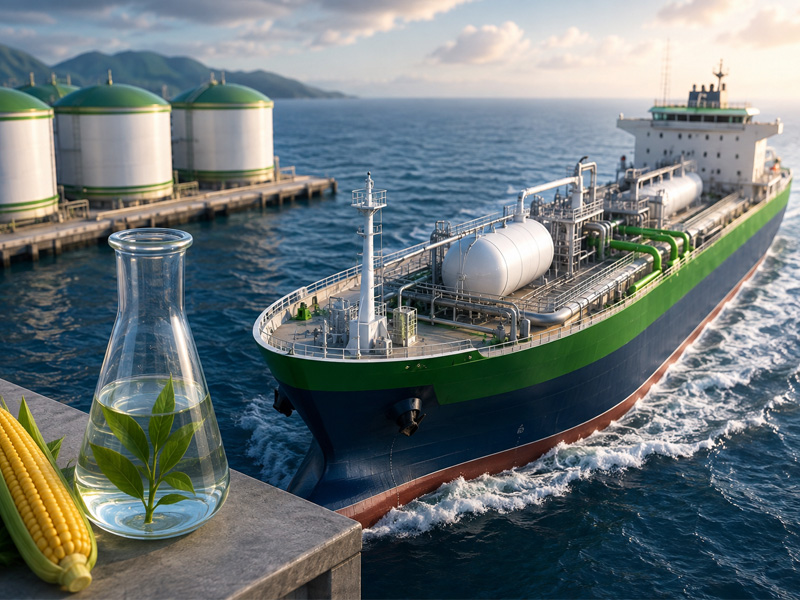


The new CFe 1100 combines hybrid technology with future methanol and battery options, giving regional shipping operators a more flexible path toward efficient and lower-emission operations
Gorinchem, Netherlands, 9 September 2026 – The global shipping industry is moving toward cleaner and more efficient vessels, and Damen Shipyards Group is responding with a new container feeder designed with the future in mind. The company has introduced the CFe 1100, a 1,100 TEU container vessel aimed at regional and international feeder services.
A feeder vessel is a smaller container ship that transports cargo between ports and larger container hubs. These ships play an important role in connecting smaller ports with major shipping networks. The new CFe 1100 is designed to make these operations more efficient while giving shipowners greater flexibility as cleaner marine fuels and technologies become more widely adopted.
The vessel combines a fuel-efficient hull with a hybrid power system. Its standard configuration includes a Power Take-Off and Power Take-In system. In simple terms, the system allows the main engine to generate electricity for onboard equipment, including refrigerated containers. This could reduce the need to rely on separate auxiliary generators.
The Power Take-In function provides additional electric power when the ship needs more speed or improved maneuverability. This allows the main engine to remain focused on efficient operation while electric power provides an extra boost when required.
One of the most notable features of the CFe 1100 is that it has been designed with future fuel changes in mind. Damen has reserved space and made provisions for the vessel to potentially be converted to methanol propulsion later. A dedicated area can accommodate a methanol fuel tank, while the fuel preparation arrangement is planned for verification by the classification society DNV.
The vessel also includes a separate battery room. This means battery technology can potentially be integrated in the future alongside methanol propulsion. Rather than designing a vessel around only one fuel technology, Damen is giving operators several possible pathways as marine propulsion technology develops.
The design also includes several optional technologies aimed at improving efficiency. One is the Damen Air Cavity System, which creates a layer of air beneath the hull to reduce resistance as the vessel moves through water. Other options include shore power, propeller and rudder flow optimization equipment, and additional systems designed to improve hydrodynamic performance.
Cargo handling has also received attention. The CFe 1100 is designed to carry 20-foot, 40-foot, and 45-foot containers. Its deck arrangement is optimized for different combinations of containers, while hydraulically operated hatch covers are intended to support faster cargo handling.
For port operations, the vessel features a flap rudder and bow thruster, with an optional stern thruster available for additional maneuverability. This can be particularly useful when operating in busy ports where vessels often need to make precise movements in restricted spaces.
The CFe 1100 is also designed for challenging northern operating conditions. It has Finnish-Swedish 1A ice class capability, allowing it to operate in first-year ice up to one meter thick. Damen has designed the ship for homogeneous loading of 14 tonnes per TEU, adding flexibility for cargo operations.
The new vessel expands Damen's existing CFe range, which includes the CFe 800. However, the CFe 1100 is currently a market design rather than a vessel tied to a confirmed customer order. No initial customer or construction contract has been announced.
The launch highlights a broader shift in commercial shipping toward vessels that can adapt to changing fuel and environmental requirements. Hybrid propulsion, battery technology, methanol readiness, and energy-efficient hull designs are becoming increasingly important as shipowners look for ways to improve operational efficiency while preparing for the next generation of marine transportation.
For the container shipping industry, the CFe 1100 represents more than an increase in vessel capacity. Its flexible design shows how future-ready ships can combine today's proven technology with options for tomorrow's cleaner propulsion systems.


.jpg "Geotab Puts Sustainable Transportation into Practice")