New Legislation Seeks to Continue Support for Cleaner School Transportation, Helping Districts Replace Older Buses With Low and Zero-Emission Alternatives
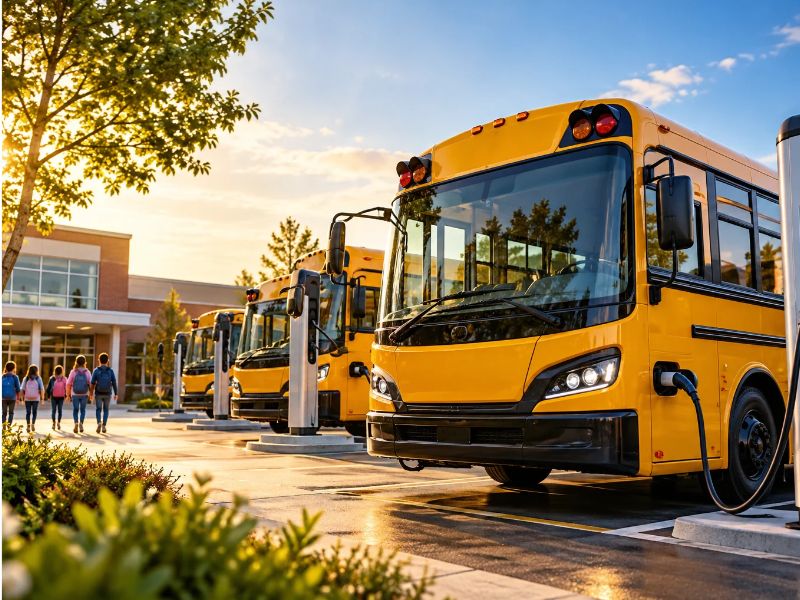
Washington, D.C., 14 October 2026 – School districts across the United States could receive continued support for cleaner school transportation under proposed legislation that would extend the federal Clean School Bus Program through 2031. The proposal seeks to authorize $5 billion in additional funding over five years, giving schools a longer period to replace older buses with cleaner alternatives.
Introduced on October 9 by Representatives Jahana Hayes, Greg Landsman, and Buddy Carter, the Clean School Bus Reauthorization Act would extend the program’s existing funding authorization for fiscal years 2027 through 2031. If approved, it would continue the current structure of allocating $1 billion annually to support school bus replacement projects.
The program was established following the Infrastructure Investment and Jobs Act of 2021, which provided $5 billion over five years for the replacement of older school buses. Administered by the U.S. Environmental Protection Agency (EPA), the initiative helps eligible school districts acquire cleaner vehicles through grants and rebates.
According to industry reports, the program has awarded approximately $2.7 billion to support the replacement of more than 8,500 school buses. More than 5,200 electric school buses funded through the initiative have already been delivered to schools, expanding access to cleaner transportation in communities across the country.
The proposed legislation would maintain the existing funding approach. Half of the annual allocation would support clean and zero-emission school buses, while the other half would be reserved specifically for zero-emission vehicles. The bill would extend the authorization period without introducing new eligibility requirements or changing the existing funding structure.
Replacing older diesel buses is an important consideration for school transportation providers. Diesel exhaust contains pollutants that can affect air quality and contribute to respiratory problems. Children, who spend time travelling to and from school, may be particularly vulnerable to the effects of polluted air.
Cleaner school buses can help reduce exposure to diesel emissions around schools, bus stops, and neighbourhoods. Electric buses also offer the potential for lower fuel and maintenance expenses, although the overall savings depend on purchase prices, electricity costs, charging infrastructure, and local operating conditions.
The proposed extension has attracted support from several organisations connected to school transportation, vehicle manufacturing, public health, and environmental initiatives. Supporters say continued funding could help school districts plan vehicle replacements more confidently and expand access to cleaner transportation options.
However, the transition involves practical challenges. Electric school buses generally require charging facilities, suitable electrical infrastructure, and staff training. School districts must also consider vehicle range, route requirements, weather conditions, and the cost of maintaining new technologies. Federal funding can help address some of these expenses, but local planning remains essential.
The legislation comes as the EPA reviews the future of the Clean School Bus Program and prepares for another funding opportunity. The agency has indicated that further details about a new round of funding would be provided later in 2026.
For school districts, bus operators, and manufacturers, the proposed reauthorization could provide a clearer long-term funding outlook. Its eventual impact will depend on congressional approval, future program implementation, and how effectively funding reaches communities that need to update their school transportation fleets.
The proposal highlights the importance of planning for safer, cleaner, and more efficient school transportation while balancing environmental goals with the practical needs of schools and fleet operators.

Latest News
.jpg "Geotab Puts Sustainable Transportation into Practice")

At Transportation Business Outlook, we believe in the power of knowledge-sharing. Our editorial approach focuses on expert opinions, CEO interviews, market analysis, and success stories, offering readers a comprehensive view of the challenges and opportunities shaping the transportation landscape.
We respect your privacy. The email address you provide will be used solely for subscription purposes and will not be stored or shared.
Subscribe Now