
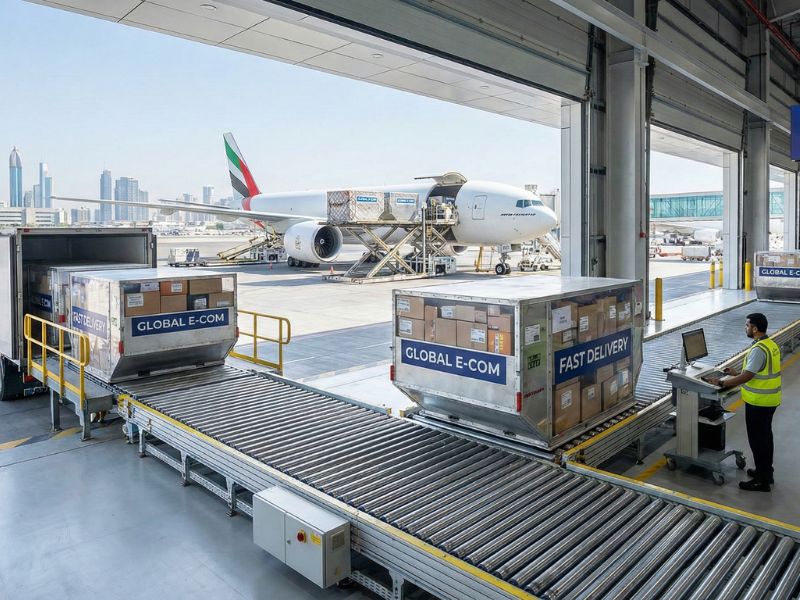
Rising online shopping volumes are reshaping air cargo operations and pushing airports to rethink speed, safety, and scalability
Dubai, 25 February 2026 – The rapid growth of e-commerce is transforming the global air cargo market. As online shopping volumes surge, air freight has become a critical link in fast and reliable delivery. While major international airports already operate advanced cargo facilities, many smaller and second-line airports are now under pressure to upgrade their infrastructure to handle rising demand.
The challenge is not only about higher cargo volumes, but also about speed. E-commerce shipments are highly time-sensitive, and customers expect quick delivery with minimal delays. At the same time, air cargo handling must follow strict safety and regulatory standards. Congestion at major cargo hubs has opened the door for smaller airports to take on more freight activity, but only if they can manage operations efficiently.
According to Bart Sloot, Sales Manager for Air Cargo Equipment at Joloda Hydraroll, the key lies in using the right handling systems. Efficient and safe cargo movement helps airports improve productivity today while building operations that can scale for future growth.
Expanding Air Cargo Market
The growth of cross-border e-commerce, especially from Asia, continues to drive air cargo volumes upward. Data from Airports Council International shows that global air cargo reached a record 127 million tonnes in 2024, marking a year-on-year increase of nearly 10 percent. This surge is changing how airports across Europe and other regions plan their cargo strategies.
Alongside new cargo terminals, many existing airports are upgrading facilities to support this demand. However, capacity often struggles to keep pace. Even with investment in front-line infrastructure, demand frequently exceeds handling capability, leading to slower turnaround times and a higher risk of cargo damage.
Why Efficient Handling Matters
Ground handling plays a vital role in keeping air cargo operations running smoothly. Global standards set by the International Air Transport Association outline strict procedures for handling Unit Load Devices, or ULDs. These rules are designed to protect both cargo and workers.
Manual handling of ULDs is discouraged, as it increases the risk of injury and damage. For example, ULDs should never be moved directly by forklifts or placed on concrete floors. As volumes grow and time pressures increase, following these guidelines becomes even more important.
Modern handling systems such as powered and non-powered roller beds, along with height-adjustable truck docks, help automate cargo movement between warehouses and aircraft. Installed at the key connection point between land and air operations, powered roller beds speed up transfers and ensure consistent, controlled movement. Modular systems can also be retrofitted onto existing trailers, allowing airports to upgrade without major rebuilding.
Improving Safety and Productivity
Inside warehouses, mobile workstations, often called slave pallets, support safer cargo movement. These platforms allow ULDs to be moved with minimal effort across the floor and can be easily repositioned or removed when not needed. This reduces physical strain on workers while improving workflow speed.
Such solutions not only increase throughput but also support compliance with health and safety standards. Faster, smoother handling reduces bottlenecks and helps airports meet tight delivery schedules without compromising safety.
A Consultative Approach to Growth
Handling rising e-commerce volumes requires more than just new equipment. Airports and cargo handlers benefit from a consultative approach that includes risk assessments and process reviews aligned with IATA requirements and airline audits. Working with experienced partners helps optimize layouts, reduce unnecessary handling steps, and improve overall process flow.
This approach also opens the door to innovation, allowing airports to make better use of limited or crowded warehouse spaces while preparing for future expansion.
Air cargo can technically be handled at almost any location. The real question is whether it can be done efficiently, safely, and at scale. Poorly designed processes can limit growth, increase workforce risk, and make regulatory compliance more difficult.
Investing in the right handling systems, such as powered roller beds and mobile workstations, is now mission-critical. These solutions protect staff, cargo, and equipment while boosting productivity and throughput. As e-commerce continues to grow, airports that modernize their air cargo operations will be best positioned to capture new business and remain competitive in a fast-moving global market.

Latest News





At Transportation Business Outlook, we believe in the power of knowledge-sharing. Our editorial approach focuses on expert opinions, CEO interviews, market analysis, and success stories, offering readers a comprehensive view of the challenges and opportunities shaping the transportation landscape.
We respect your privacy. The email address you provide will be used solely for subscription purposes and will not be stored or shared.
Subscribe Now